


How To Become a Mobile Game Developer: Tools and Steps for 2026

Eneba Hub contains affiliate links, which means we may earn a small commission if you make a purchase through them—at no extra cost to you. Learn more


START WITH A PROJECT
Explore Udemy for Unity-based mobile development courses, then apply each lesson to a small playable game.
Here’s how to become a mobile game developer: learn a game engine like Unity, practice C#, and finish a small playable project. ZipRecruiter reports an average US annual pay of $108,471, but that mobile game developer salary figure isn’t a beginner offer or an indie revenue forecast. A working game is a better first target than a mobile game developer salary milestone.
Start by following a beginner Unity project and adapting its controls for a phone. Becoming a mobile game developer requires practice beyond the lessons: course duration doesn’t establish how quickly you’ll be ready for employment.
This guide covers the work, qualifications, mobile game development software, game app developer salary context, and a project-based roadmap. It also compares courses by skill focus and outlines adjacent careers for readers interested in software development, testing, or game design.
Jump to:
What Is a Mobile Game Developer?
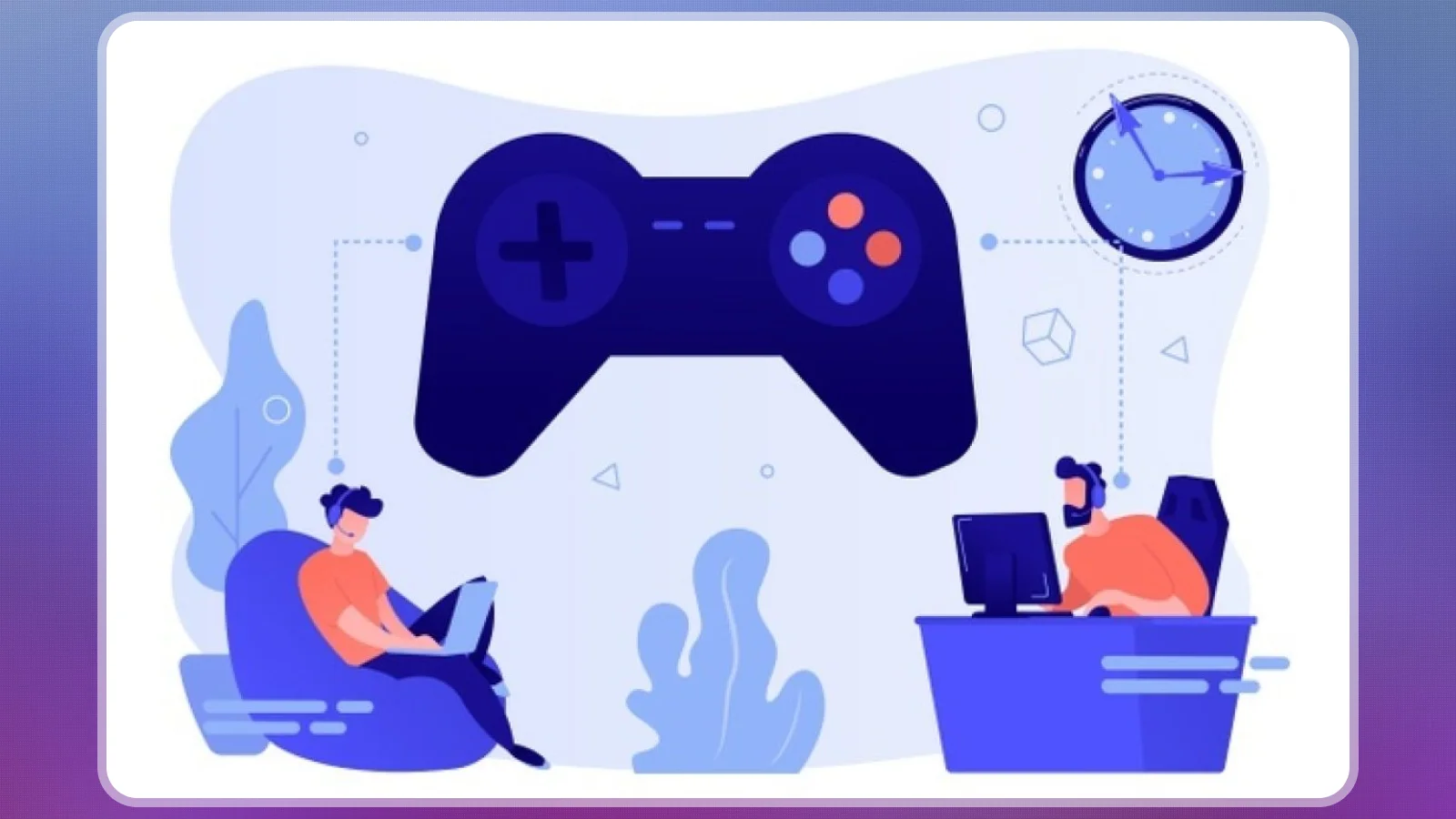
A mobile game developer builds and maintains games for smartphones and tablets. Developers may work at studios, mobile publishers, or independently, with responsibilities that change according to team size.
Becoming a mobile game developer combines software development with the constraints of handheld hardware. A game must respond to touch, fit different screens, and perform acceptably outside a desktop editor.
What Exactly Does a Mobile Game Developer Do?
The job combines coding, testing, and release work. Mobile game developer jobs can emphasize a specific system or cover the entire project.
The main tasks include:
- Building gameplay systems: Write mechanics like movement, health, damage, and scoring. A small space shooter can demonstrate these systems without requiring a large game world.
- Adapting screens and controls: Make menus readable across phone and tablet layouts. Touch targets need to remain usable when the screen shape changes.
- Testing on devices: Check responsiveness and performance on the hardware you intend to support. An editor preview cannot show every device-specific problem.
- Integrating services: Connect analytics, advertising, or purchases when the project calls for them. These features introduce extra testing and platform requirements.
- Publishing and updating: Prepare builds for app-store submission, address feedback, and repair problems after release.
Coding and testing remain closely connected: a mechanic isn’t finished when it merely compiles. Anyone working out how to become a mobile game developer should practice diagnosing failures as carefully as adding features.
Roles in Mobile Game Development
The main tracks are gameplay programming, UI/systems programming, and generalist development. Mobile game developer jobs use different titles, so compare responsibilities before deciding that a listing matches your skills.
These tracks share foundations but need different portfolio evidence:
|
Role |
What You’d Do |
How Much Code |
First Portfolio Piece |
|---|---|---|---|
|
Gameplay programmer |
Build movement, combat, and scoring |
Substantial gameplay code |
A playable arcade prototype |
|
UI/systems programmer |
Build menus, saves, and purchase flows |
Structured application and interface code |
A menu with persistent settings |
|
Generalist indie developer |
Handle design, implementation, and release |
Depends on project scope |
A complete mobile mini-game |
A small generalist project is a useful starting point before specialization. Choose mobile game development software around the project you can finish, rather than the longest feature list.
A guided mobile project can give that practice a clearer structure:
How to Become a Mobile Game Developer: Pros and Cons
Becoming a mobile game developer suits people who enjoy creative problem-solving and repeated debugging. The trade-off is that building a game and earning dependable income from it are separate challenges.
Consider these differences before committing:
| Pros | Cons |
|---|---|
| ✅ Visible results – playable projects demonstrate your implementation skills. ✅ Creative work – mechanics and player feedback shape technical decisions. ✅ Transferable foundations – programming and debugging apply beyond games. ✅ Multiple paths – pursue studio work, contracts, or independent projects. | ❌ Uncertain solo income – publishing a game doesn’t establish a dependable business. ❌ Ongoing maintenance – device problems and platform changes can require updates. |
The financial risks of earning a mobile game developer salary at a studio differ from those of self-publishing. Choose based on your interest in maintaining a game and managing a business alongside development.
Mobile Game Developer Qualifications
You can build and publish independently without a degree. Requirements for US studio employment depend on the employer, so becoming a mobile game developer through self-study doesn’t mean every vacancy will accept the same credentials.
Organize your preparation around these areas:
- Education: Computer science or game-development study can provide structured foundations. Read individual job requirements instead of assuming that a degree is universally mandatory or irrelevant.
- Alternative paths: Self-study and structured courses let you practice implementation directly. Their value depends on what you can build and explain afterward.
- Portfolio: Present a finished playable project with clear controls, stable behavior, and a short explanation of your contribution. Separate your original work from tutorial material.
- Certificates: Completion certificates from Udemy or Coursera document learning. They are different from an exam-based vendor certification.
- Working skills: Practice debugging methodically, accepting feedback, and explaining technical choices to people who don’t write code.
These qualifications support different hiring decisions. Mobile game developer jobs involving existing production code may need stronger collaboration and maintenance skills than a solo prototype demonstrates.
A finished, explainable project gives employers something concrete to assess. To become a mobile game developer without a degree, make that evidence easy to inspect: show the game, describe a difficult bug, and explain the solution.
Game app developer salary searches shouldn’t set your learning priorities. A game app developer salary listing is useful only when its responsibilities match the work you’re preparing to do.
Engines and Tools Mobile Game Developers Rely On
Start with an engine and a manageable task list. Unity is the core mobile game development software used by the courses below. Scratch offers a simpler introduction to programming logic before engine work.
These companion tools include GameAnalytics for player metrics and options for planning and collaboration:
|
Tool |
Best For |
Listed Price |
|---|---|---|
 |
Player-behavior metrics |
Free |
 |
Task organization |
Free plan |
 |
Game-project planning |
Free plan |
 |
Code repositories and collaboration |
$10/month basic plan |
Learn the engine before expanding your toolkit. Extra mobile game development software won’t resolve an oversized project, and analytics becomes more useful once there’s something playable to measure.
Mobile Game Developer Salary and Career Progression
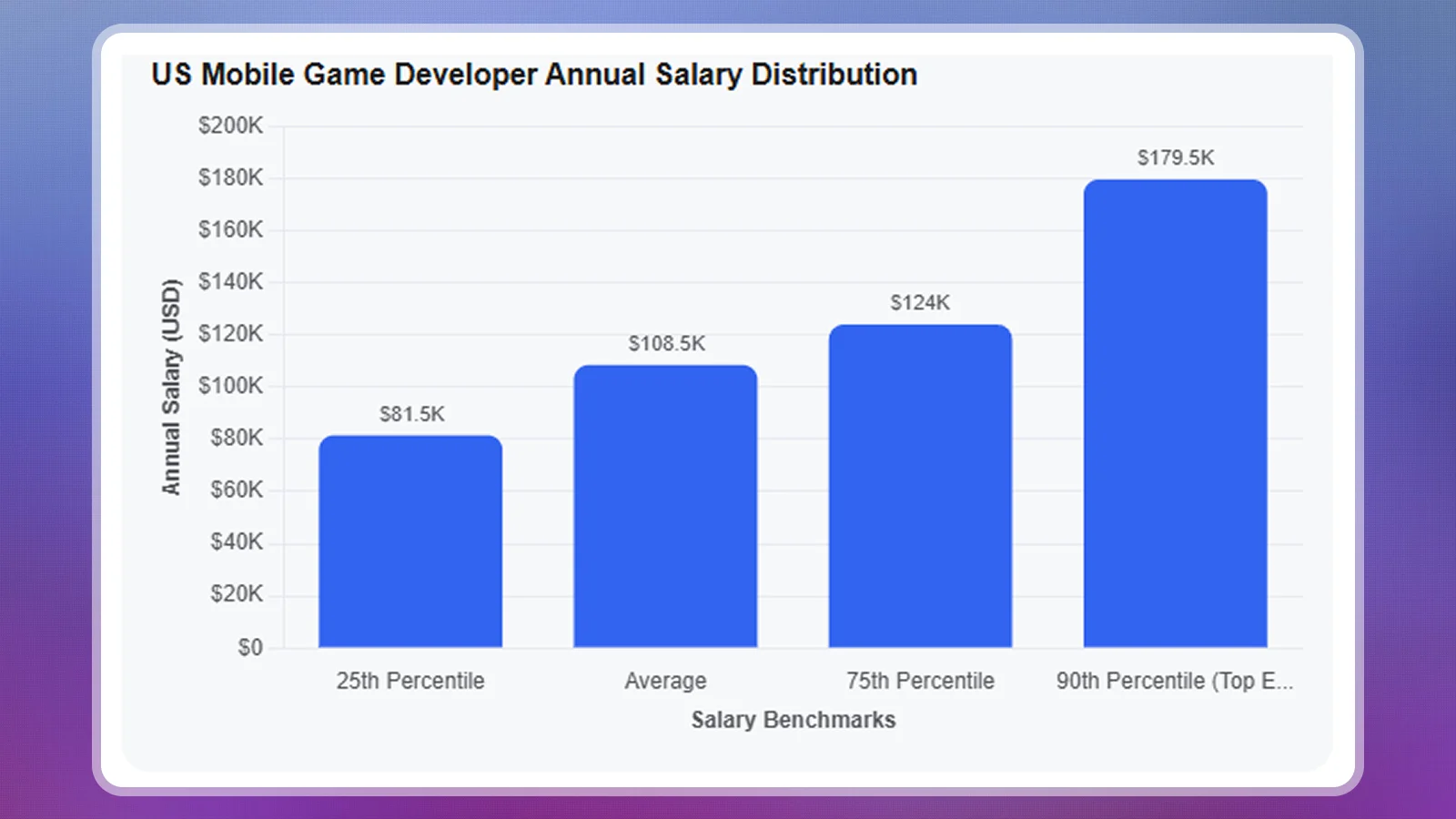
The occupation-specific mobile game developer salary average is $108,471 annually in the US, according to ZipRecruiter. This is an average across the occupation, not a starting-pay commitment.
Its distribution provides context for a game app developer salary comparison:
- 25th percentile: $81,500 annually.
- 75th percentile: $124,000 annually.
- 90th percentile: $179,500 annually, a top-earner figure rather than a target for someone entering the field.
These mobile game developer salary percentiles aren’t experience bands: they don’t establish junior, mid-level, or senior pay. Compare mobile game developer jobs by responsibilities and location before treating a percentile as your target.
Progression generally means taking ownership of larger systems, reviewing code, and supporting releases. Knowing how to become a mobile game developer opens that technical path, but neither a course certificate nor a shipped project guarantees advancement.
Treat every game app developer salary estimate as a comparison tool, not a forecast.
How To Become a Mobile Game Developer: A Step-by-Step Guide
Build a complete, testable game before expanding your scope. Learning how to become a mobile game developer is a sequence of practical skills, not a fixed countdown to employment.
Step 1: Learn the Fundamentals of a Game Engine
Choose Unity for this roadmap and follow a beginner project through scene setup, objects, and input. Learn how changes in the editor affect the running game.
Keep the first exercise small enough to understand without copying unexplained code. Becoming a mobile game developer is easier to assess when you can explain what each component does. Focus on the engine itself before adding more mobile game development software.
Step 2: Learn C# and Core Mobile Patterns
Practice variables, conditions, functions, and classes in C#. Apply them to a health-and-damage mechanic, then test the behavior with touch input.
Run the project on a device you intend to support. Watch for unreadable interface elements and awkward controls. To become a mobile game developer, you need to connect code behavior with the player’s experience, rather than treating a successful desktop preview as the finish line.
Step 3: Build a Small, Finished Project
Finish a compact game with a clear objective, failure state, and restart flow. An arcade dodging game is enough if its controls work and its rules are understandable.
Remove features that prevent completion. Mobile game developer jobs need evidence of problem-solving, and an unfinished feature list offers less to discuss than a playable build. Document what you changed after testing and identify any remaining limitations plainly.
Step 4: Take a Structured Course
Use a course to address gaps you can now recognize, particularly screen scaling or release preparation. The Recommended Courses section below compares mobile-focused instruction with programming foundations.
Pause lessons to recreate the behavior independently. That is a more useful test than remembering the instructor’s clicks. Learning how to become a mobile game developer requires applying instruction to your own project, not collecting completion certificates without practice.
Step 5: Apply for Entry-Level or Freelance Roles
Apply with the finished game as your portfolio centerpiece. Explain your contribution, show the controls, and describe a technical problem you solved.
Read mobile game developer jobs closely for engine, platform, and collaboration requirements. Becoming a mobile game developer through a solo project doesn’t demonstrate every studio workflow. Compare a game app developer salary offer only after understanding the contract, responsibilities, and required experience.
Step 6: Keep Shipping and Learning
Improve the project using player feedback, then build something that stretches a specific weakness. Practice maintaining existing code as well as starting fresh.
Keep release notes and explain why you changed a system. To become a mobile game developer with a stronger portfolio, show increasing judgment rather than a growing pile of similar tutorials. Your next project should add evidence of a skill the previous game couldn’t demonstrate.

Recommended Courses
Choose mobile implementation or programming foundations according to your current gap. A course should support becoming a mobile game developer through practice, not replace independent work.
|
Course |
Provider |
What It Covers |
Duration |
|---|---|---|---|
|
Unity Mobile Game Development |
 |
Mobile game implementation and screen adaptation |
7 hours of video |
|
Game Design and Development with Unity |
 |
Design foundations and prototype development |
3–6 months |
|
C# Programming for Unity Game Development |
|
C# foundations and programming patterns |
3–6 months |
|
Unity Game Development: Fun Mini-Game Projects |
|
Project-based engine practice |
3–6 months |
|
Introduction to Basic Game Development using Scratch |
|
Introductory game logic |
Less than 2 hours |
Completion certificates aren’t vendor certifications. Choose instruction for the mobile game development software you’re learning; the introductory Scratch project is a preliminary option, not mobile publishing training.
Alternate Careers in Mobile Game Development
Consider broader software work, quality assurance, or game design if mobile implementation doesn’t match your interests. A mobile game developer salary comparison alone can’t capture those day-to-day differences.
These adjacent careers offer different emphases:
- General software developer: The U.S. Bureau of Labor Statistics reports median annual pay of $135,980 in May 2025 (latest data available). This broader occupation isn’t mobile-game-specific.
- Software QA analyst/tester: The same source reports $104,300 in May 2025. The emphasis shifts toward testing behavior and investigating defects.
- Game designer: Focus on rules, balance, and player experience rather than primarily implementing code.
Engine familiarity remains useful across game teams. Compare the work itself before using a game app developer salary figure to choose a career.
Final Verdict on How To Become a Mobile Game Developer
This path is worth pursuing if you enjoy coding, testing, and improving playable systems. A small finished game is a sensible first commitment because it reveals the work before you invest heavily in training.
It is a weaker fit for someone seeking quick, dependable income through independent releases. Salaried software or QA work may better suit that goal, although employment still requires relevant skills and a successful application.
The practical answer to how to become a mobile game developer is to learn an engine, finish a manageable project, and use structured instruction to close specific gaps. Apply when your portfolio can demonstrate the work you want to be hired to do.
FAQs
Pay depends on the role and employer. Treat a mobile game developer salary or game app developer salary figure as context, not a starting offer. Begin with Unity basics and a small playable project.
There is no fixed timeline. Your coding background, project scope, and practice affect readiness. Becoming a mobile game developer requires independent implementation and testing beyond completing a course.
No, independent development doesn’t require a degree. US studio requirements depend on the employer. A playable project helps demonstrate ability, but it doesn’t replace credentials a particular vacancy requires.
Yes, for people who enjoy programming and repeated testing. Mobile game developer jobs and independent publishing have different income risks, so choose the working arrangement as carefully as the creative field.
C# fundamentals, engine familiarity, debugging, and interface scaling are useful starting skills. Practice testing touch controls on devices and explaining the technical choices behind your game.
Start with Unity and a simple task list. Add Trello or GameAnalytics when the project needs them. Learning how to become a mobile game developer through a finished project is the most practical way.